
Incubating Academic Ventures with Kingston University School of Art
We designed and delivered an ongoing in-house programme for academic staff to develop research applications as venture building, with products and services launched, grants secured and active industry partnerships to show for it.
30+
academics supported, to date
4+
cohorts delivered
10+
KE funding grants and investment secured
Context
Knowledge exchange in many academic institutions has challenges when it comes to delivery. This starts at a strategic level, whilst framing both ambition and concrete pathways for ideas to flourish, and launch. Whilst external funding sources are fairly numerous, internal seed funding can be either hard to come by, or restrained in its scope. However, where we see the most consistent gap is in the infrastructure that helps individual academics navigate the deployment of their research into real-world applications - and the skills and mindsets required.
In 2024, we ran a first pilot with Kingston University School of Art. Before the programme began, we interviewed academics to understand what was actually getting in the way of knowledge exchange. Four barriers came back consistent across the group:
No clear pathway from research to commercial application
Low confidence communicating value to external stakeholders
Time constraints inside teaching and research workloads
Limited access to commercialisation support at the right stage
Kingston University and Studio Zao have been working together to address those four problems ever since.
Approach
We designed and delivered a full Knowledge Exchange Engine for Kingston School of Art, which we continue to operate today. Whilst this involved two distinct tracks, tailored to different stages, this developed one connected KE community and pipeline. Trust takes time
Track 1: Entrepreneurship Foundations
A structured, focused cohort programme for early-stage academic ventures, with research worth developing, but no refined pathway to do so.
Vision Hack
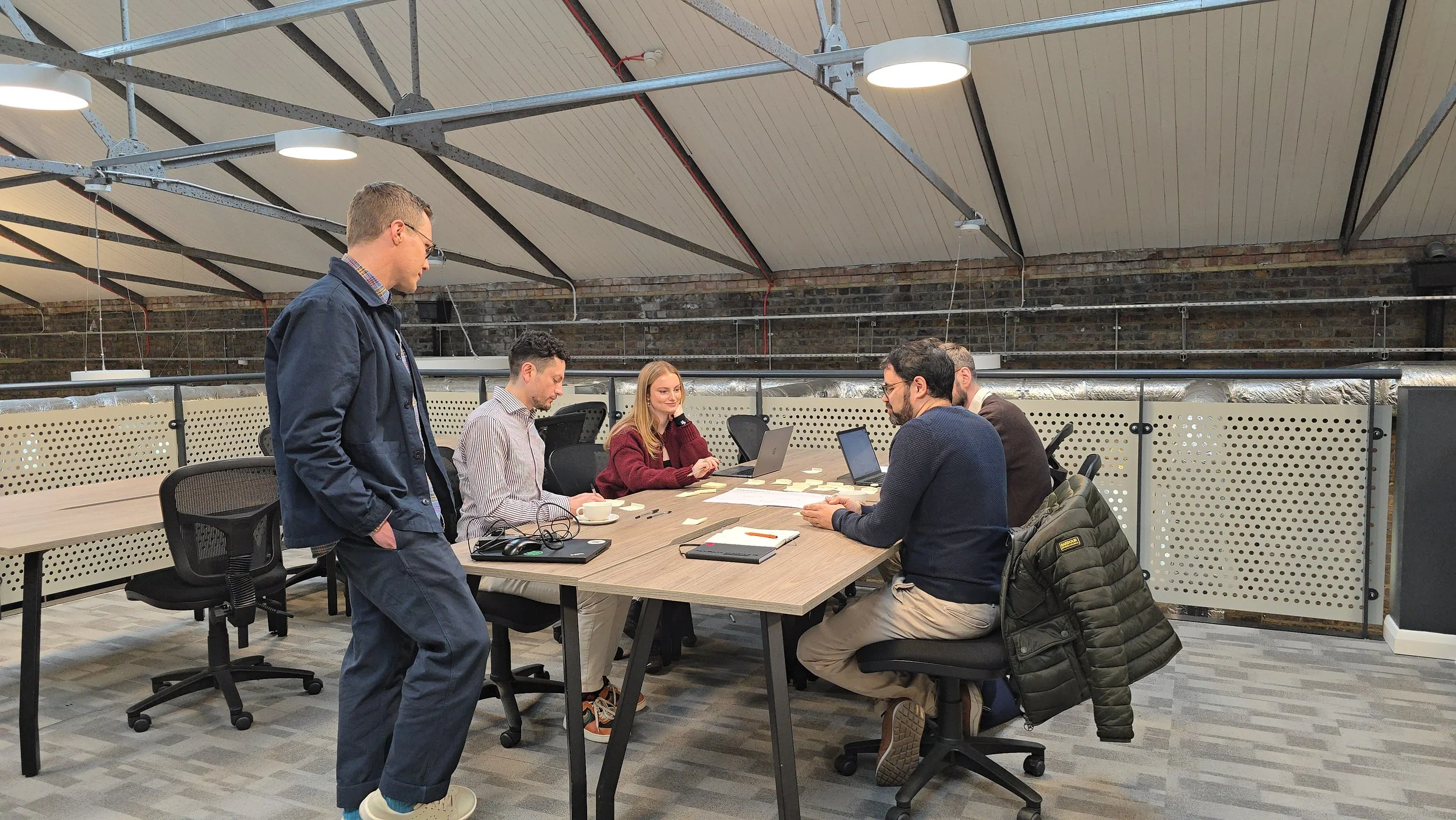
Academics map research strengths to real-world problems, surface assumptions, frame "How Might We" questions, and run AI-enhanced ideation.
Concept Hack
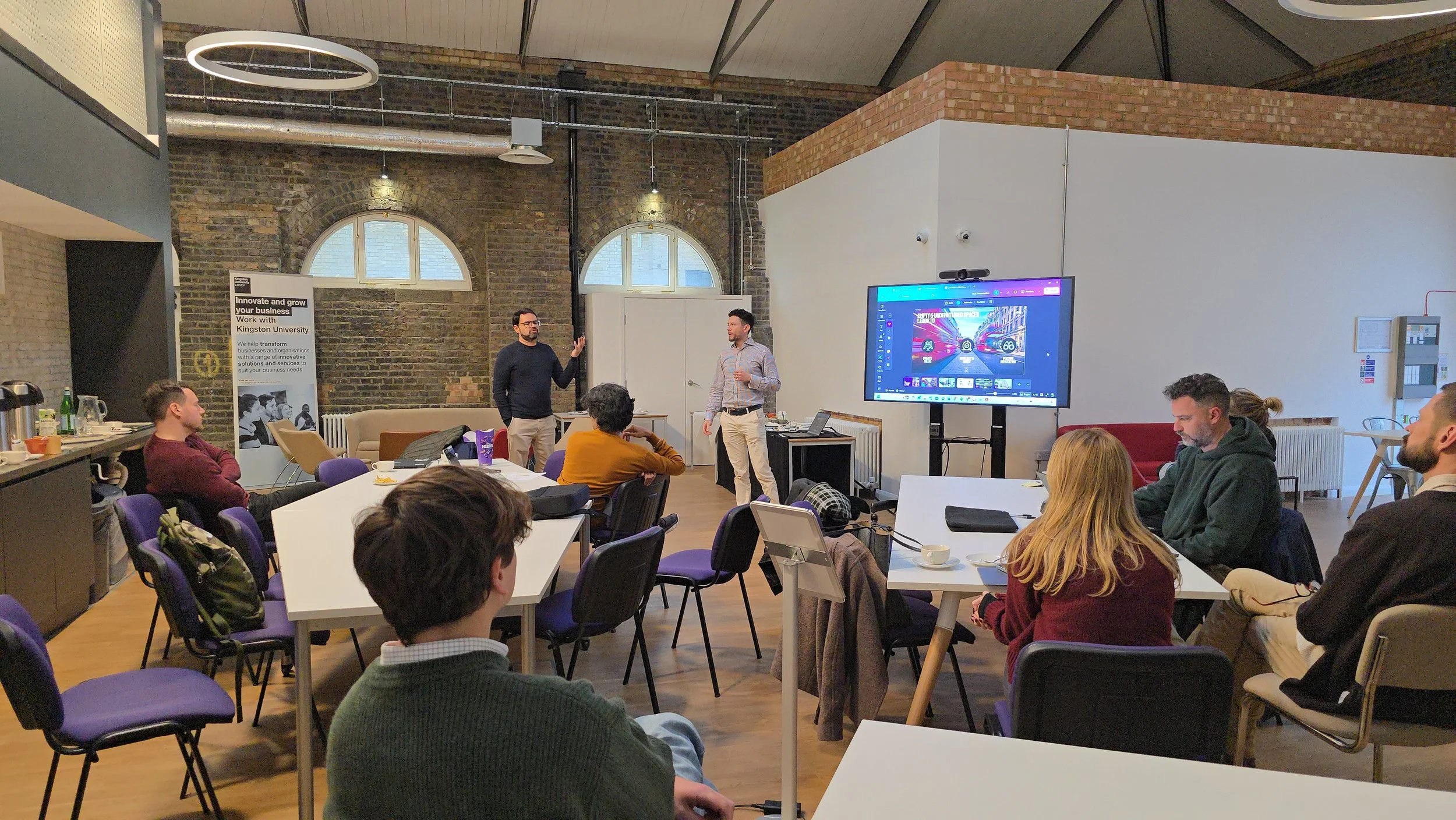
Academics develop commercial, sustainable business model options tied to Knowledge Exchange pathways, build early prototypes using AI tools, design low-cost validation experiments, and pitch their ideas back to peers.
In addition to each session, we held briefing calls, pre-session diagnostics, post-session coaching, and drop-in support. Each academic leaves the programme with a validated Knowledge Exchange Roadmap for their concept, including milestones, experiments and agreed metrics, which form part of their performance evaluation through the universities KERI (Knowledge Exchange and Research Institution) structure.
Track 2: Academic Venture Studio
Our Track 2 approach involves a Venture Studio model. Aimed at academics who have graduated from Track 1 and progressed and validated ideas through initial funding or partnerships join the Studio, with a defined proposition and the appetite to push it forward. The support resembles co-founding more than coaching:
A focused ‘Development Day’, fully ringfenced for deep working time on the venture / proposition, including any external partners.
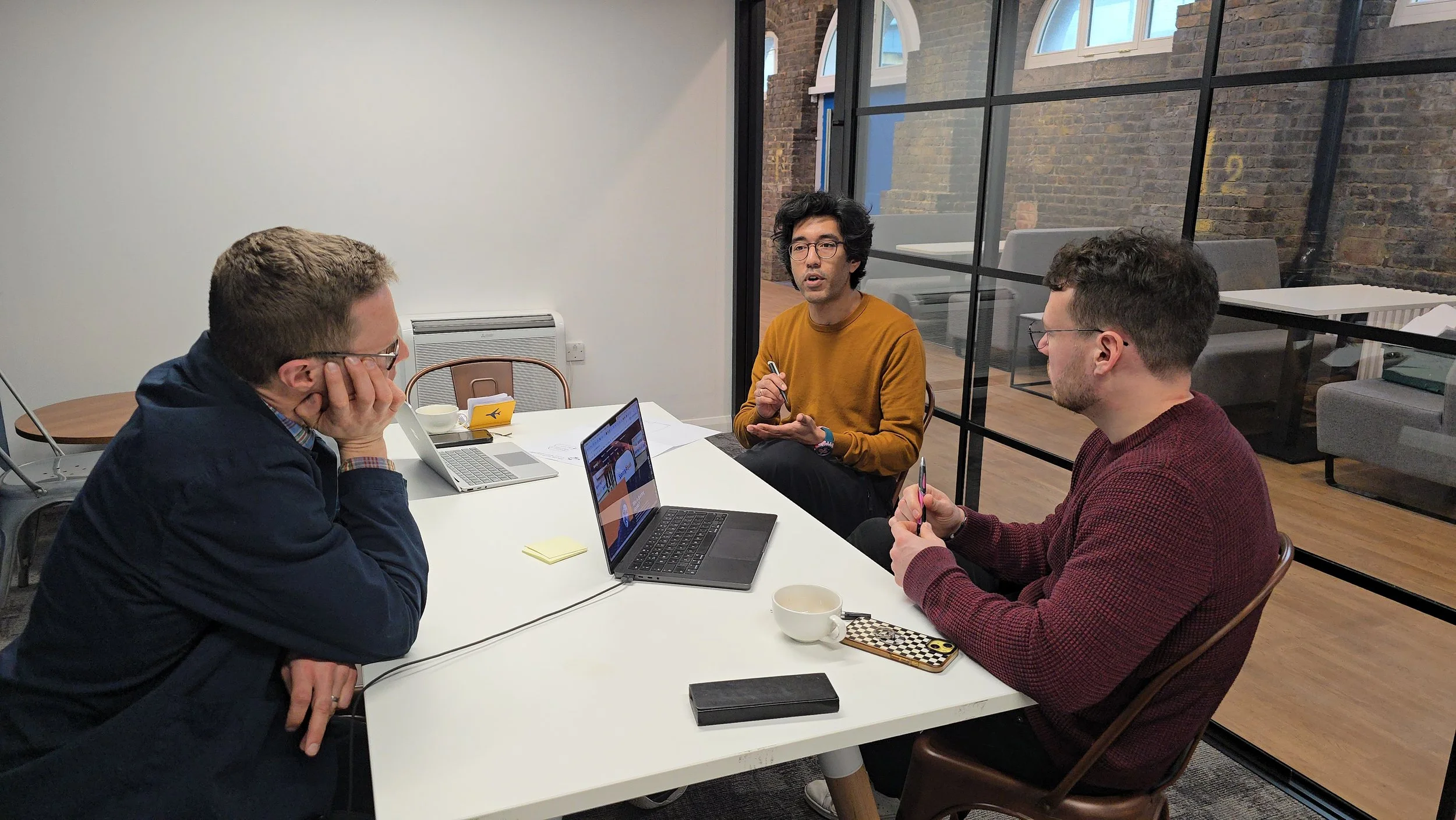
Regular 1:1 working sessions, with the Studio Zao team embedded alongside the academic / team
Commercial model development across three pathways: service-based KE, IP and licensing, and spin-out
Funding alignment with Innovate UK, Creative Catalyst, and AHRC, amongst other public and private funding sources
Partnership and collaborator brokering
Focusing on tangible next steps, bespoke for each venture
Pitching showcase preparation
A Venture Co-Founder Approach
We function as embedded venture co-founders. The pitch gets built together. The prototype gets built together. The investment case gets built together. The launch gets built together. This is closer to an entrepreneur-in-residence model than anything in conventional KE workshop delivery, but with the participant calling the shots and driving the idea forward (they retain full ownership of IP and other rights, alongside the institution).
Academics are busy. Most are non-entrepreneurial by training. Without someone driving execution alongside them, they might often revert to research mode by default. Calls and advice do not solve that. Doing the work alongside them does.
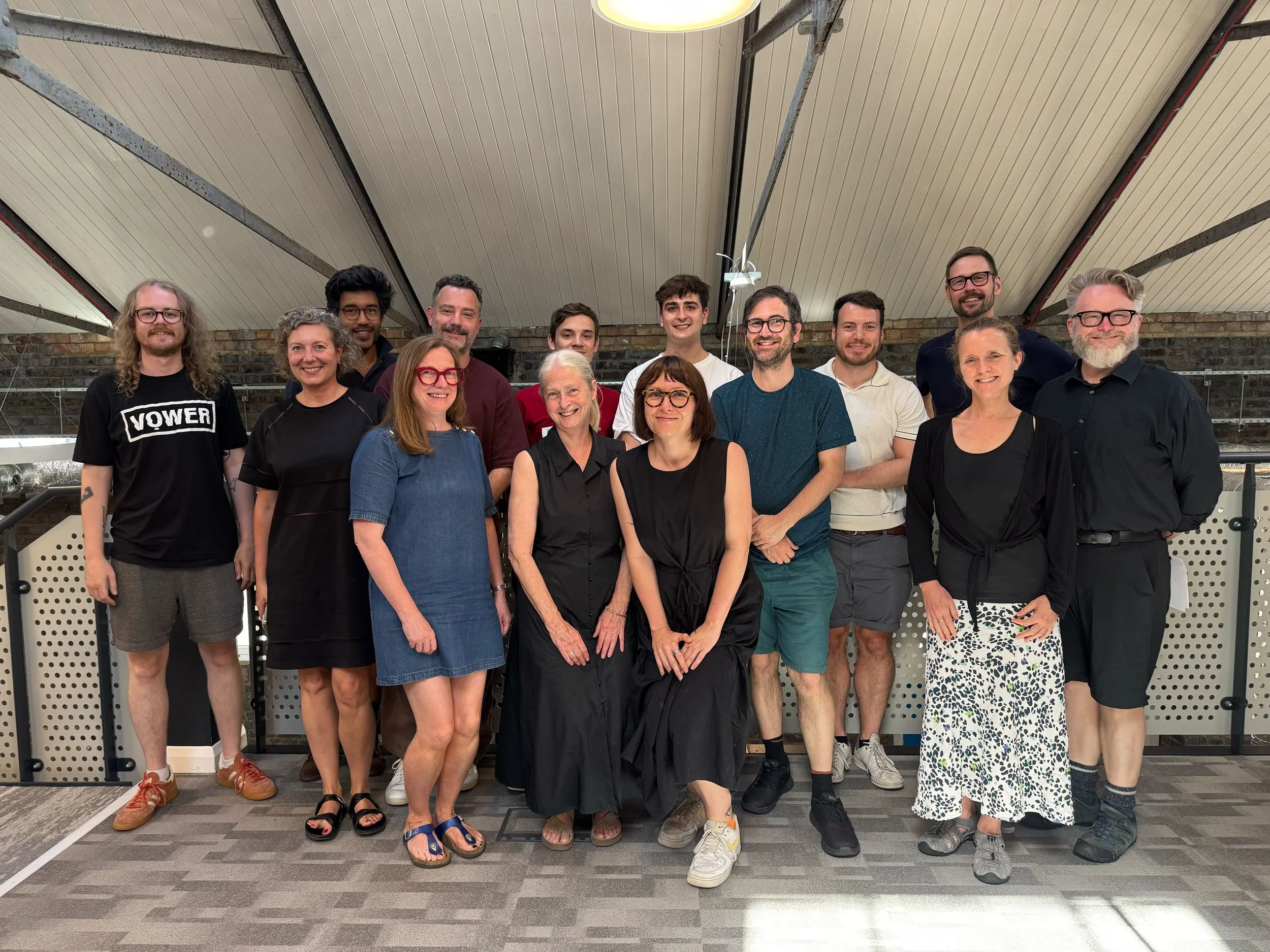
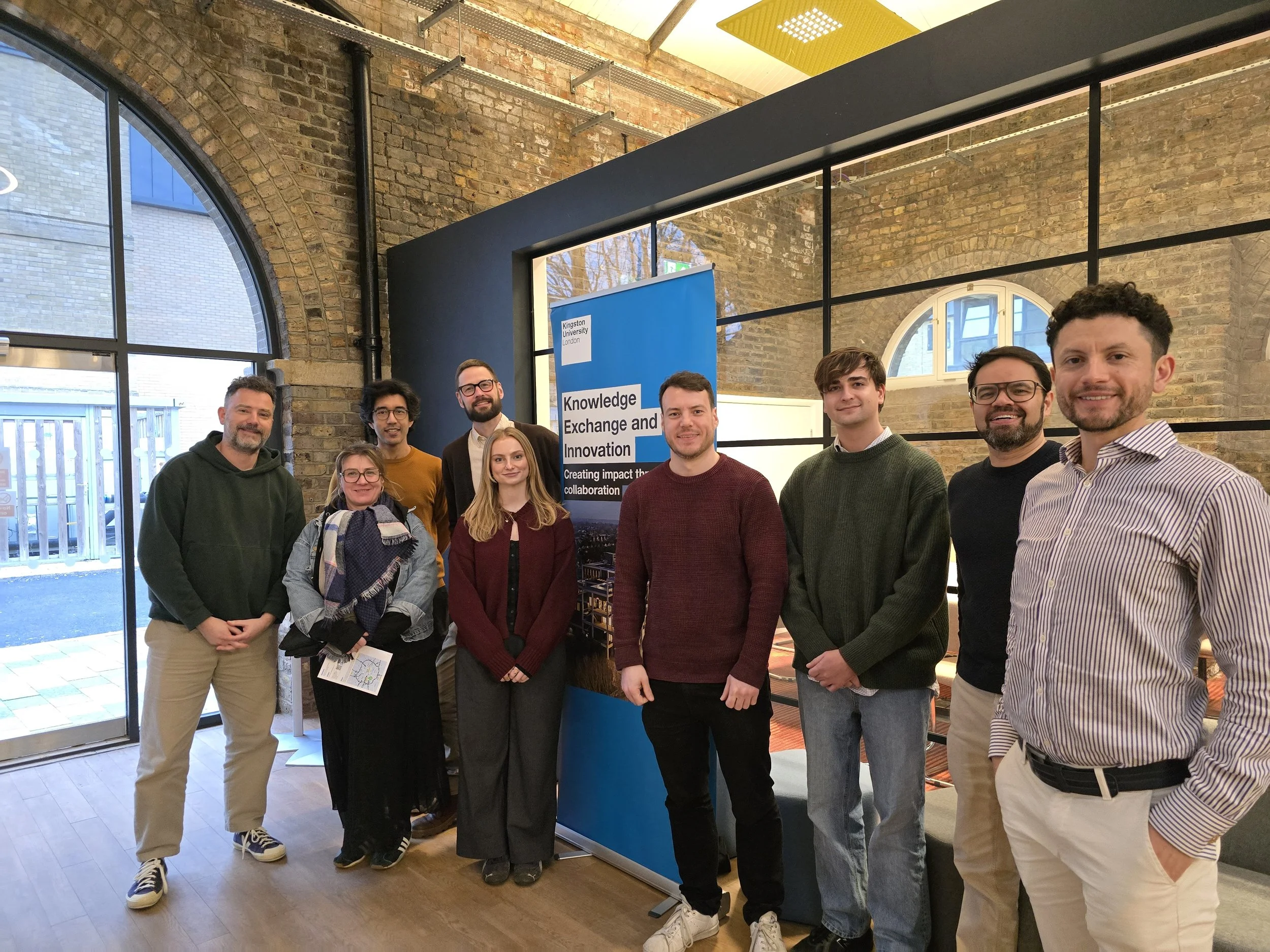
Track 1 team photo captured during the June 2025 programme.
AI as a Practical Accelerant
We use AI tools as practical accelerants throughout both tracks.
Rapid prototyping in sessions. Claude, Gamma, Gemini, Lovable - with other leading AI tools - allow academics to visualise propositions as landing pages, pitch decks, or concept mockups during the session itself.
AI-assisted ideation. Surfaces non-obvious connections between research strengths and market or community needs.
Assumption mapping and synthesis.Reduces the cognitive overhead of organising a complex idea landscape from scratch.
Proposition iteration between sessions.Lowers the friction of continued development outside workshop time, where academics have the least capacity.
Propositions that would otherwise stay abstract become tangible within hours. For academics with limited commercial experience, seeing a working prototype of their own idea creates a confidence shift that compounds across every session that follows.
Impact
The programme has produced concrete outcomes across both tracks.
Premier League Club Partnerships
Secured Premier League funding to roll out a proposition with multiple clubs across the league. Started life as a Track 2 session output and is now in active delivery.
Fashion and Fabric Digital Archive
A phygital digital twin of Kingston's fashion and fabric collection, opening archival material to researchers, designers, and industry partners. From AI-assisted prototype in a Track 2 session to a live website and secured seed funding.
Get Better Books
Illustrated books helping children navigate painful medical procedures, developed through earlier work at Kingston School of Art. 3,500+ children reached across the UK, with expansion into Germany and the UAE underway.
“Our workshops with Studio Zao were incredibly useful for supporting colleagues in developing their knowledge exchange projects. The input sessions provided a range of tools and skills for getting started and growing these projects confidently. The advice from Chris and Charlotte was thought-provoking and inspiring. Huge thanks to the Studio Zao team!”